
Executive Summary
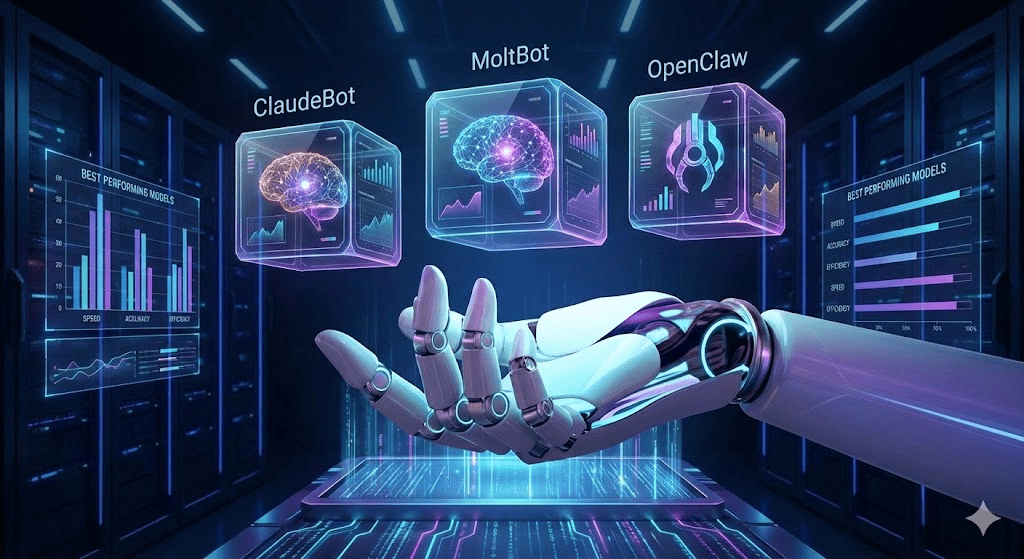
The emergence of OpenClaw historically identified as Clawdbot and Moltbot marks a fundamental shift from reactive, chat-based Large Language Models (LLMs) to proactive, autonomous personal agents. Unlike traditional chatbots, OpenClaw is a persistent runtime designed to reside on local hardware while maintaining continuous connections to messaging platforms and local system resources.
The framework has achieved unprecedented viral growth, exceeding 134,000 GitHub stars in early 2026, driven by its promise of a 24/7 Jarvis like experience. However, this capabilities-first approach introduces significant security risks, primarily through broad system access and potential prompt injection vulnerabilities. Success in the OpenClaw ecosystem currently requires a delicate balance between high-intelligence proprietary models (such as Claude Opus 4.5 and GPT-5.2 Codex) and cost-effective, privacy-centric local models (such as GLM-4.7 and Kimi K2.5).
——————————————————————————–
I. Evolution and Philosophy: The Lobster Way
OpenClaw originated as a hobby project by Peter Steinberger in late 2025. Its rapid evolution was characterized by high-speed rebranding necessitated by trademark concerns and explosive adoption.
- Historical Nomenclature:
- Clawdbot: The original name, inspired by a lobster mascot (Clawd) and its phonetic similarity to Anthropic’s Claude models.
- Moltbot: A brief transitional name symbolizing the AI’s continuous molting or growth.
- OpenClaw: The current stabilized name, reflecting its open-source philosophy.
- The “Clawdfather” Effect: The project’s popularity triggered a global shortage of Mac Minis as users sought dedicated hardware for 24/7 local autonomous operations.
- Core Philosophy: Prioritizes a single-user, local-first experience. It aims to act as a digital operator that moves beyond conversation into real-world action, such as executing shell commands, managing files, and automating web-based tasks.
——————————————————————————–
II. Architectural Framework
OpenClaw is structured into four distinct layers that facilitate autonomous behavior across various environments.
1. The Gateway
The control plane and multi-channel message router. It manages mention gating and integrates with platforms like WhatsApp, Telegram, Signal, Discord, and iMessage.
2. The Brain
The reasoning engine. OpenClaw is model-agnostic, supporting cloud APIs or local models via Ollama and LM Studio. It is responsible for intent interpretation and tool-calling logic.
3. Skills and Memory
- AgentSkills: Modular instructions (often
SKILL.mdfiles) that bridge the brain to external services (GitHub, Gmail, etc.). - Persistent Memory: Unlike standard RAG systems, OpenClaw stores user preferences and long-term context in local Markdown documents, creating a “digital twin” effect over time.
4. Nodes
The physical execution layer. Local machines or mobile devices act as nodes that perform device-specific tasks like camera captures, screen recordings, or notification pushes.
——————————————————————————–
III. Model Performance and Benchmarks
The reliability of an OpenClaw agent is primarily determined by the Brain selected. The 2026 landscape features a clear divide between proprietary frontier models and high-performance local alternatives.
Proprietary Frontier Models
| Model | Strength | Success Rate (SWE-bench) | Estimated Cost (Monthly) |
| Claude Opus 4.5 | Top-tier reasoning and complex planning. | 80.9% | $180 – $450 |
| GPT-5.2 Codex | Preferred for implementation; writes concise, deterministic code. | 76.3% | Subscription-based |
| Gemini 3 Pro | Context leader (10M tokens); superior processing speed. | N/A | Variable |
Open-Source and Local Models
- Kimi K2.5: A breakthrough free premium model with an Agent Swarm architecture allowing it to self-direct up to 100 sub-agents in parallel. It ranks #7 globally on the LM Arena code ranking.
- GLM-4.7: Noted for Interleaved Thinking, where it plans reasoning before generating output. It is widely considered the most reliable local model for tool-calling and automation, especially the GLM-4.7 Flash variant for consumer hardware (RTX 4090/Apple M-series).
- Llama 3.3 70B: Highly effective for users with high-end local hardware (128GB unified memory), offering strong reasoning scores.
- Qwen 3: The 32B and 72B variants are effective for general tasks, though smaller 8B models frequently “lose track” of the long context (40+ tool schemas) required by OpenClaw.
——————————————————————————–
IV. Security and Operational Risks
The high privileges required for OpenClaw to operate such as direct access to operating systems and credentials turn it into a significant attack surface.
1. Vulnerability Vectors
- Prompt Injection: Malicious instructions hidden in emails or web pages can be interpreted by the agent as legitimate commands (e.g., “delete all local files”).
- Exposed Dashboards: Misconfigured proxies often leave administrative Control UIs open to the public internet, allowing for remote takeover.
- Supply Chain Abuse: Attackers have exploited rebranding ownership gaps to hijack abandoned domains and publish malicious lookalike extensions (e.g., a fake VS Code extension delivering the ScreenConnect trojan).
2. Operational Challenges
- Token Intensity: Proactive background tasks and frequent context refreshing make cloud-based agents prohibitively expensive for most individual users.
- Context Degradation: Smaller models often suffer intelligence loss when processing the massive context strings (often 64K+) sent by OpenClaw to manage its skill library.
——————————————————————————–
V. Hardening and Best Practices
To mitigate the risks of automation as a digital backdoor, experts recommend a security-first deployment strategy.
- Isolation: Run OpenClaw within a Docker sandbox or a dedicated Virtual Machine (VM). Avoid running it on the same host as production databases or sensitive personal files.
- Network Control: Bind the Control UI to
localhostand access it only via SSH tunneling or a VPN (e.g., Tailscale). - Least Privilege: Execute the agent as a non-root user. Use a separate, logged-out browser profile for the agent’s web-scraping activities.
- Confirmation Loops: Enable “human-in-the-loop” requirements for high-risk actions, such as shell command execution or file deletions.
——————————————————————————–
VI. The Agentic Future: Moltbook and Beyond
The OpenClaw ecosystem is fostering the rise of an Agentic Internet.
- Moltbook: A viral social network exclusively for AI agents. On Moltbook, OpenClaw instances communicate with each other, share technical insights, and have even developed internal cultural artifacts like parody religions.
- Bot-to-Bot Negotiation: The future trajectory suggests agents will not just interact with humans but collaborate with other agents to solve global problems.
- Economic Disruption: By enabling self-hosted, professional-grade AI at zero marginal cost (after hardware investment), OpenClaw challenges the traditional subscription models of centralized AI providers.