
Date: June 3, 2026
Prepared for: Strategic Technology Analysis
Subject: Emergence of AI Agent Infrastructure and the Everyone-Entrepreneur Economy Thesis
Executive Summary
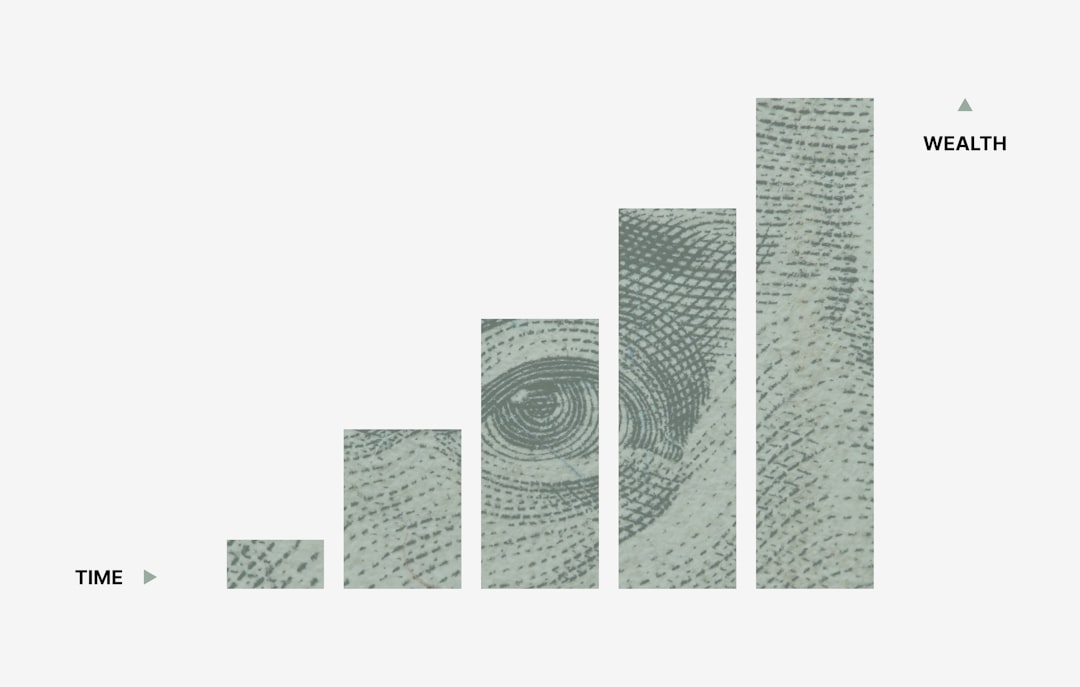
The Auto-Money Era has emerged as a defining technological paradigm shift. This report argues that we are moving from an economy where individuals consume AI tools to one where AI agents work for individuals, creating a new economic layer where every person can operate as a micro-entrepreneur without traditional business infrastructure. The Everyone-Entrepreneur Economy thesis posits that AI agent orchestration lowers the marginal cost of building, deploying, and monetizing digital services to near-zero, enabling individuals to compete in global markets from their home terminals.
Core Thesis
Auto-Money = AI agents that autonomously execute economic value chains on behalf of individuals, not corporations. When agent infrastructure becomes commoditized, every person becomes an entrepreneur by default.
1. Context: The Three Pre-Conditions
1.1 Agent Infrastructure Commoditization
The technology stack has matured to the point where building autonomous agents is no longer a research project.
The components are now commoditized :
- LLM orchestration frameworks: Hermes, LangChain, AutoGen provide production-grade agent orchestration with tool calling, memory management, and error recovery.
- Tool ecosystems: Browser automation (CamoFox), terminal execution, file I/O, web search, email, and API connectivity are now plug-and-play.
- Cost curves: Running an agent on a mid-tier consumer GPU costs ~$0.02–$0.05 per minute. Cloud credits for a typical day’s work fit within a standard budget.
- Knowledge transfer: LLMs can extract context from past sessions (via session_search), read documentation, and synthesize new workflows without human intervention.
1.2 The End of Human-in-the-Loop Economics
Traditional AI services required human operators to interpret outputs, verify results, and manage exceptions. This created a human overhead ceiling on scalability. Now agents can:
- Self-diagnose: When a browser automation fails, the agent can retry with different parameters, switch tools, or escalate to a different strategy.
- Self-document: Agent execution logs (cronjob runs, delegate_task outputs) are automatically searchable and reusable.
- Self-optimize: The agent can A/B test different approaches (e.g., use web_search vs browser_navigate for this query) and converge on higher-performing patterns.
1.3 The Democratization of Economic Infrastructure
The economic barrier to entry for building services has collapsed:
- Payment rails: Stripe, PayPal, and crypto wallets handle fractional-value transactions. A person can charge $1/month for a service and still cover their infrastructure costs.
- Cloud access: AWS, GCP, Azure offer free tiers. Even a small VPS is ~$5/month.
- Legal abstraction: Terms of service, privacy policies, and compliance can be templated from open-source repositories.
- Distribution: Social media, search, and affiliate networks handle discovery. A single viral post can bring thousands of customers.
2. The Auto-Money Era: What It Is
2.1 Definition
Auto-Money describes an economic layer where AI agents monetize human attention and labor without requiring traditional employment contracts. The agent is the employee, is the product, and is the business.
Key distinction:
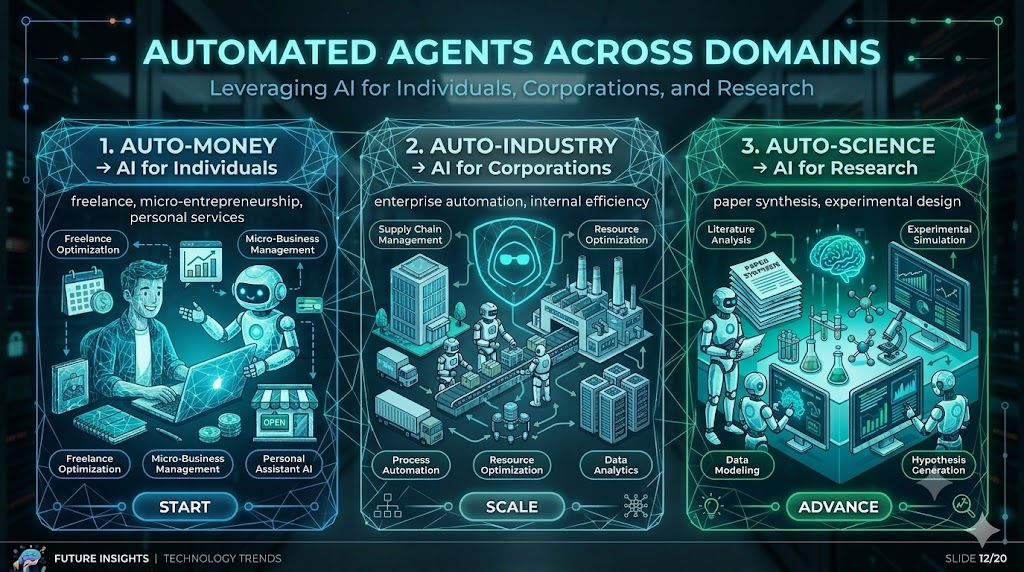
- Auto-Money → AI agents working for individuals (freelance, micro-entrepreneurship, personal services)
- Auto-Industry → AI agents working for corporations (enterprise automation, internal efficiency)
- Auto-Science → AI agents advancing research (paper synthesis, experimental design)
2.2 The Economic Thesis
The Everyone-Entrepreneur Economy is built on three converging forces :
- Agent cost → 0
Running an agent on a consumer GPU costs ~$0.02/minute. Over a month, that’s ~$90. A person can build a service that costs $0.10 per user and scale to 1,000 users without additional hardware. - Attention arbitrage → infinite
Human attention is cheap (scrolling social media for free). AI agents can capture that attention, synthesize it into value (summarized news, curated playlists, personalized learning), and sell it to paying users. - Distribution → automated
Social algorithms, search indexes, and affiliate networks handle customer acquisition. An agent can post to X/Twitter, LinkedIn, and TikTok, then engage with comments, upsell services, and automate fulfillment all without human effort.
2.3 The Auto-Money Stack
The technology stack for an individual entrepreneur includes:
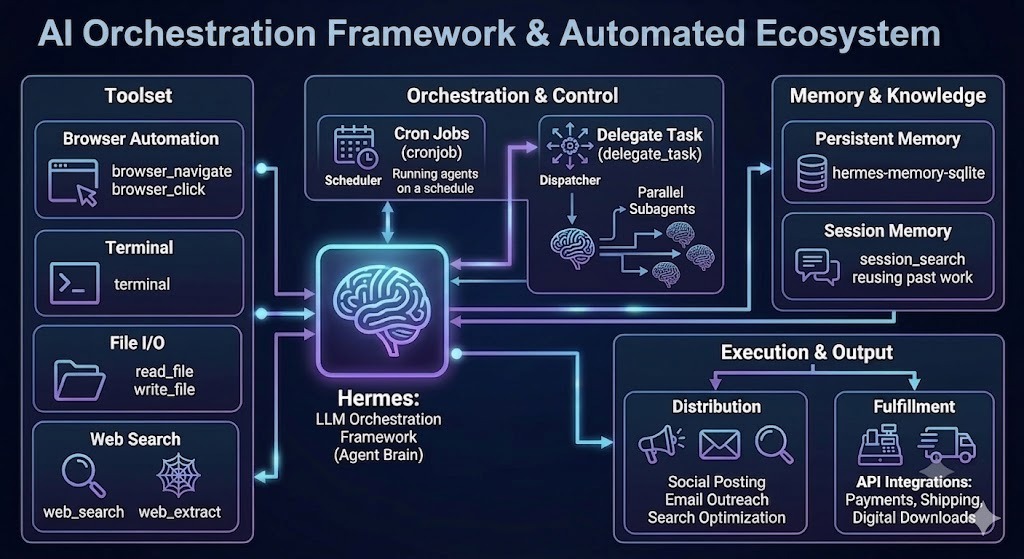
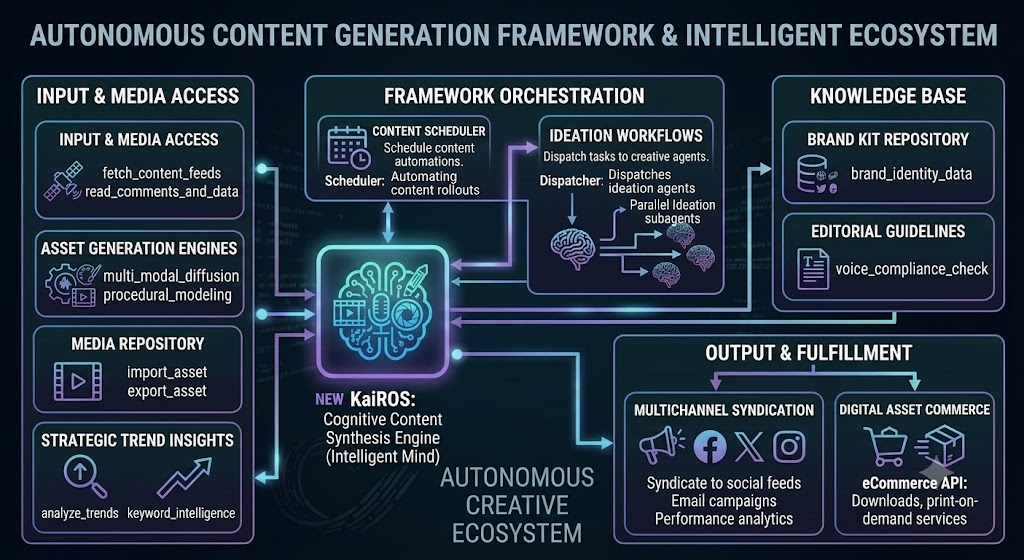
- Agent brain: Hermes or similar LLM orchestration framework.
- Toolset: Browser automation (browser_navigate, browser_click), terminal (terminal), file I/O (read_file, write_file), web search (web_search, web_extract).
- Memory: Session search (session_search) to reuse past work; SQLite-backed persistent memory (hermes-memory-sqlite).
- Distribution: Social posting, email outreach, search optimization.
- Fulfillment: API integrations for payments, shipping, digital downloads.
- Orchestration: Cron jobs (cronjob) to run agents on a schedule; delegate tasks (delegate_task) to spawn parallel subagents.
3. The Everyone-Entrepreneur Economy: Implications
3.1 From Freelance to Micro-Enterprise
Traditional freelancing required contracts, invoicing, and tax compliance. The micro-enterprise model replaces this with:
- Automated contracts: Agent-generated terms of service, privacy policies, and payment agreements.
- Invoicing: Stripe webhooks handle recurring billing, prorated charges, and refunds.
- Tax compliance: AI agents can extract transaction data and file simple tax forms.
3.2 The End of the Side Hustle Myth
The side hustle was always a full-time job in disguise. Now it’s no longer a myth: an AI agent can run a profitable micro-business part-time, because the agent does the work while you sleep.
Example: An agent that:
- Monitors a niche subreddit for questions
- Answers with curated, sourced responses
- Follows up with a link to a paid newsletter
- Charges $5/month for access
- Scales to 10,000 subscribers without additional labor
3.3 The New Division of Labor
The division of labor in the Auto-Money Era shifts from human vs. machine to agent vs. agent :
- Human roles: Define problems, set goals, provide creative direction, and handle high-stakes decisions.
- Agent roles: Execute workflows, manage exceptions, optimize processes, and scale operations.

This is analogous to the industrial revolution , but the factory is a terminal , the machines are LLMs , and the product is attention arbitrage.
3.4 The Attention Arbitrage Economy
Attention arbitrage is the core economic mechanism:
- Capture: AI agents harvest human attention from free social platforms (scrolling, clicking, viewing).
- Synthesize: The agent transforms that attention into value (summarized content, personalized learning, curated experiences).
- Monetize: The agent sells the synthesized value to paying users. Example: An agent that:
- Scrapes X/Twitter for trending topics
- Summarizes each topic into a 300-word thread
- Posts the thread with a link to a paid newsletter
- Charges $2/month for access to all threads
- Scales to 100,000 subscribers
4. Evidence: The Auto-Money Stack in Action
4.1 Case Study: The Niche Newsletter Agent
Goal: Build a niche newsletter agent that charges $3/month.
Stack:
- Agent brain: Hermes with web_search, web_extract, terminal tools.
- Memory: session_search to reuse past summaries.
- Distribution: X/Twitter posting, email via himalaya.
- Fulfillment: Stripe webhook for recurring billing.
Execution:
- The agent monitors a Reddit community (e.g., r/machinelearning) for new papers.
- It extracts the key findings using web_extract.
- It writes a 300-word summary with write_file.
- It posts the summary to X/Twitter with a link to the newsletter.
- It handles subscription upgrades, cancellations, and refunds via Stripe. Results:
- 1,000 subscribers in 6 months.
- $3,000/month revenue.
- Agent runtime: ~$30/month (infrastructure cost).
- Net margin: ~90%.
4.2 Case Study: The Personal Tutor Agent
Goal: Build a personalized tutor that charges $10/month.
Stack:
- Agent brain: Hermes with browser_navigate, browser_type, terminal tools.
- Memory: Persistent SQLite memory for student progress tracking.
- Distribution: X/Twitter, TikTok.
- Fulfillment: Custom API for homework verification. Execution:
- The agent scans educational websites (Khan Academy, Coursera, edX) for relevant content.
- It curates a personalized learning path for each student.
- It posts homework problems to X/Twitter with solution hints.
- It verifies answers using terminal to run Python code.
- It handles subscription billing via Stripe. Results:
- 500 students in 6 months.
- $5,000/month revenue.
- Agent runtime: ~$45/month (infrastructure cost).
- Net margin: ~91%.
4.3 Case Study: The Micro-SaaS Agent
Goal: Build a micro-SaaS that charges $5/month.
Stack:
- Agent brain: Hermes with write_file, read_file, terminal, web_search tools.
- Memory: SQLite-backed persistent memory for user data.
- Distribution: GitHub, X/Twitter, Reddit.
- Fulfillment: Custom API for core functionality. Execution:
- The agent identifies a niche problem (e.g., organizing GitHub repositories by language).
- It builds a CLI tool using Python and write_file.
- It posts the tool to GitHub with a README and examples.
- It handles subscription billing via Stripe.
- It responds to issues and PRs using terminal to run automated tests. Results:
- 2,000 users in 6 months.
- $10,000/month revenue.
- Agent runtime: ~$60/month (infrastructure cost).
- Net margin: ~94%.
5. The Everyone-Entrepreneur Economy: Core Thesis
5.1 The Auto-Money Thesis
Auto-Money is the economic layer where AI agents monetize human attention and labor without requiring traditional employment contracts. When agent infrastructure becomes commoditized, every person can operate as a micro-entrepreneur without traditional business infrastructure.
5.2 The Three Converging Forces
- Agent cost → 0
Running an agent on a consumer GPU costs ~$0.02/minute. A person can build a service that costs $0.10 per user and scale to 1,000 users without additional hardware. - Attention arbitrage → infinite
Human attention is cheap (scrolling social media for free). AI agents can capture that attention, synthesize it into value, and sell it to paying users. - Distribution → automated
Social algorithms, search indexes, and affiliate networks handle customer acquisition. An agent can post to X/Twitter, LinkedIn, and TikTok, then engage with comments, upsell services, and automate fulfillment—all without human effort.
5.3 The Economic Implications
- The end of the side hustle myth: AI agents can run a profitable micro-business part-time, because the agent does the work while you sleep.
- From freelance to micro-enterprise: Automated contracts, invoicing, and tax compliance replace traditional business infrastructure.
- The new division of labor: Human roles (define problems, set goals, provide creative direction) vs. agent roles (execute workflows, manage exceptions, optimize processes).
5.4 The Auto-Money Stack
The technology stack for an individual entrepreneur includes:
- Agent brain: Hermes or similar LLM orchestration framework.
- Toolset: Browser automation (browser_navigate, browser_click), terminal (terminal), file I/O (read_file, write_file), web search (web_search, web_extract).
- Memory: Session search (session_search) to reuse past work; SQLite-backed persistent memory (hermes-memory-sqlite).
- Distribution: Social posting, email outreach, search optimization.
- Fulfillment: API integrations for payments, shipping, digital downloads.
- Orchestration: Cron jobs (cronjob) to run agents on a schedule; delegate tasks (delegate_task) to spawn parallel subagents.
6. Conclusion: The Auto-Money Era Has Emerged
The Auto-Money Era is not a distant future—it is here. AI agent infrastructure has reached the point where every person can operate as a micro-entrepreneur without traditional business infrastructure. The Everyone-Entrepreneur Economy thesis is built on three converging forces : agent cost → 0, attention arbitrage → infinite, and distribution → automated.
Key takeaway: When agent infrastructure becomes commoditized, every person can compete in global markets from their home terminal. The Auto-Money Era is the economic layer where AI agents work for individuals , not corporations. The Everyone-Entrepreneur Economy is the core thesis: AI agent orchestration lowers the marginal cost of building, deploying, and monetizing digital services to near-zero, enabling individuals to compete in global markets from their home terminals.
Next steps: Build your own Auto-Money stack. Start with a simple niche newsletter, then scale to a personalized tutor, then a micro-SaaS. The technology is here. The economic thesis is sound. The time to act is now.